
News and Information
CW resources
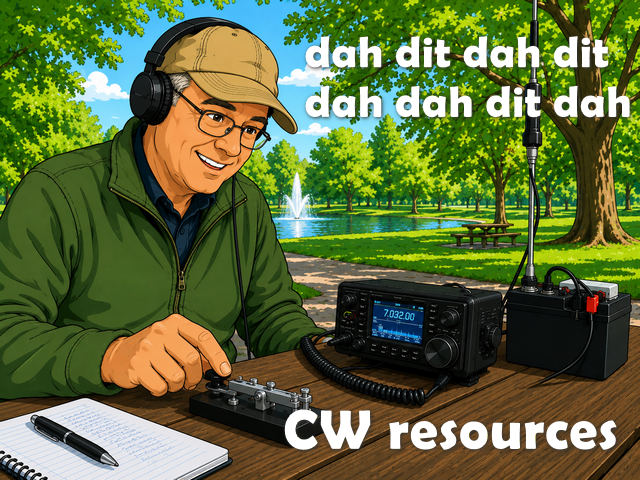
Some great resources for learning and practicing Morse code
Learning CW: Great Resources for Getting Started
CW, or Morse code, remains one of the most rewarding parts of amateur radio. Learning morse code acts as a mental workout that sharpens listening skill and builds cognitive agility. It is also a highly reliable backup for emergencies and a celebrated skill within the amateur radio community. Whether you want to work DX on low power, prepare for emergency communications, or simply enjoy the rhythm and skill of manual communication, there are more learning tools available today than ever before.
Start With the Right Method
Most experienced operators recommend learning Morse code by sound rather than memorizing dots and dashes visually. Programs based on the Koch Method or Farnsworth timing help build real listening skills from the beginning.
Excellent CW Learning Apps
Several apps make daily practice easy:
- CW Player: http://f6dqm.free.fr/soft/cwplayer/en/cwplayer.htm
- Learn CW Online (LCWO): https://lcwo.net/
- Morse Mania — Fun game-style lessons for beginners: https://apps.apple.com/us/app/morse-mania-learn-morse-code/id1511042196
- G4FON: https://www.g4fon.net/
- Morse Code Ninja: https://morsecode.ninja/
- IZ2UUF Morse Koch CW — Well-known Koch-method trainer for serious practice: https://www.iz2uuf.net/cw/
- Morse-It — iPhone/iPad app for practice and decoding: https://apps.apple.com/us/app/morse-it/id284942940
- Morse Code World: https://morsecode.world/
Many operators find that even 10–15 minutes of daily practice produces steady improvement.
Online Classes, Practice and Training
A few websites stand out for structured training and real-world practice:
- LCWO.net — One of the best free CW training sites available
- CW Academy by CWops — Free online classes with volunteer instructors
- Long Island CW Club — Live Zoom classes, practice sessions, and community support
These programs provide both beginner instruction and advanced operating practice.
Long Island CW Club will be offering free Field Day training and practice sessions during the month of June 2026. These sessions are conducted over zoom, and are open to all amateur radio operators. You do not need to be a member of LICW to attend, and there is no charge for the training. Additional information on LICW FD CW training can be found at: https://longislandcwclub.org/2026fielday/.
Practice On the Air
Eventually, the best training is real radio use. Slow-speed CW nets and programs like the Straight Key Century Club (SKCC) encourage relaxed operating and help new operators gain confidence. K1USN Radio Club also offers on the air Slow CW contest. Information at K1USN.com
Many amateur radio repeaters, clubs, and HF groups also schedule beginner-friendly CW sessions.
Useful Hardware Tools
Practicing with a real key can help develop proper timing and rhythm. Some programs recommend beginning with a straight key and others recommend starting out with a paddle key. Common beginner tools include:
- Straight keys
- Paddle keys with electronic keyers
- USB practice oscillators
- Portable CW trainers
- Some modern transceivers also include built-in CW training modes and decoders.
The Key to Success: Consistency
Learning CW is much more about consistency than talent. Short daily sessions work better than occasional marathon practice. Most operators are surprised how quickly their ears adapt once they stop trying to “decode” dots and dashes manually.
Stick with it, get on the air early, and enjoy the process — CW is one of the most personal and satisfying modes in amateur radio.